


Views: 0 Author: Site Editor Publish Time: 2026-09-10 Origin: Site


Off-the-shelf equipment offers rapid deployment and immediate market readiness for most recycling operations. However, sub-optimal baling easily bottlenecks facility throughput when metal profiles misalign. You might face unexpected machine jams or highly inefficient compaction cycles. This reflects a harsh procurement reality for modern facility managers. Purchasing standard equipment failing to handle specific scrap profiles ultimately degrades your return on investment. Spatial constraints also severely limit operational efficiency when machines simply do not fit your floor plan.
We must establish a strict framework for evaluating these critical choices. The operational gains of a specialized unit often outweigh extended lead times. You will learn exactly when specialized initial capital expenditure makes operational sense. Facility managers must weigh engineering modifications against daily processing demands. Careful planning prevents costly integration failures down the line.
Standard balers suffice for predictable, uniform scrap metals and standard facility layouts.
Customization becomes necessary when dealing with rigid space constraints, unique alloy densities, or specialized integration into existing automated lines.
Altering baseline vertical metal baler specifications requires factoring in extended lead times, specialized maintenance training, and proprietary spare parts.
Selecting an engineering-focused supplier is critical to mitigating the implementation risks of a custom build.
You must first understand what standard machinery delivers before considering modifications. A standard vertical metal baler features fixed hydraulic pressures, typically ranging from 50 to 100 tons. They utilize uniform chamber sizes designed for common aluminum cans or light steel siding. These baseline models usually employ manual or semi-automatic wire tie systems. Manufacturers build them in batches. This allows for quick shipping and easy installation. Standard controls use basic relay logic or simple programmable logic controllers. They work perfectly for predictable, low-memory scrap metals. You plug them in, train the operator, and start compacting.
Customization requires completely rethinking the machine's architecture. Designing a custom vertical metal baler involves modifying baseline components to survive extreme stress. Engineers might increase hydraulic cylinder bore sizes for higher compaction force. They often reinforce chamber walls using high-tensile wear plates like Hardox 450 to resist abrasive alloys. You might also alter loading door configurations to accommodate oversized materials. Custom units can feature specialized hopper designs or automated ejection rams. These modifications target highly specific operational hurdles.
The decision threshold relies on specific operational metrics. Buyers should stop looking at standard models when scrap variability exceeds 30 percent. If your facility processes multiple high-density alloys daily, standard frames will warp. Volume spikes also trigger this transition. When your throughput demands continuous 24-hour operation, standard cooling systems overheat. You must scope custom requirements when standard machines threaten to throttle your output.
Equipment Feature | Standard Models | Custom Builds |
|---|---|---|
Hydraulic Pressure | Pre-set limits (typically 50-100 tons) | Variable, engineered up to 300+ tons |
Chamber Lining | Standard mild steel | High-tensile wear plates (e.g., Hardox) |
Lead Time | 2 to 4 weeks | 12 to 20+ weeks |
Integration | Standalone operation | Fully integrated into conveyors/automation |
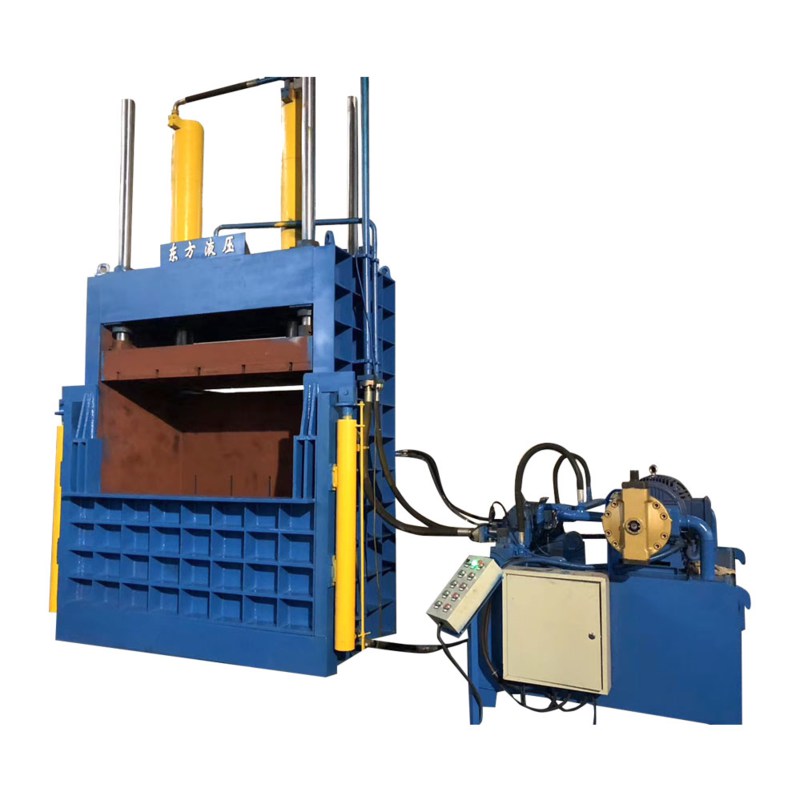
Standard machines struggle against high-memory metals. Aluminum extrusions, titanium turnings, and spring steel inherently resist permanent deformation. They bounce back. This spring-back effect strains standard hydraulic cylinders and warps standard doors. Titanium turnings pose additional risks due to their sharp edges and high tensile strength. Standard balers break down under this repetitive stress. You lose valuable production time to frequent maintenance interventions.
You must evaluate specialized engineering solutions for these materials. Custom ram faces distribute extreme pressure evenly across uneven loads. Specialized serrated shear blades cut through overhanging extrusions without jamming. High-memory metals also require prolonged holding times under peak pressure. This demands upgraded hydraulic cooling systems. Air-to-oil or water-to-oil heat exchangers prevent fluid degradation during continuous high-pressure cycles. Modifying these components ensures reliable performance against aggressive materials.
Many urban recycling centers operate within legacy buildings. Low ceiling heights strictly dictate equipment size. Floor load limits in older facilities restrict the installation of heavy, high-capacity standard machines. Narrow access points or tight loading docks complicate the rigging and installation process. You cannot easily knock down walls or raise roofs to accommodate standard machinery. These physical realities force a different engineering approach.
You need specific architectural modifications to overcome these hurdles. Engineering a compact facilities vertical metal baler demands extreme spatial efficiency. Engineers often utilize side-mounted power units rather than top-mounted ones to clear low ceilings. Telescopic cylinders provide full compaction strokes without requiring massive vertical clearance. They maintain high compaction force within a drastically reduced footprint. Heavy-duty load-distributing base plates protect fragile concrete floors. These adaptations keep operations running in confined spaces.
Modern scrap processing relies on seamless material flow. Manual loading severely bottlenecks high-capacity shredders or sorting lines. Standard balers often require dedicated forklift operators to load material and remove finished bales. This manual intervention disrupts automated facility throughput rates. When upstream conveyors deliver scrap faster than standard machines can process it, material backs up on the floor.
Customization synchronizes the machine with your broader operation. Facilities assess the need for custom widened hoppers to accept material directly from incline conveyors. Specialized feed chutes prevent spills and direct heavy scrap precisely into the chamber. Automated ejection systems push finished bales directly onto waiting pallets or exit conveyors. This eliminates manual handling. The baler becomes a fluid extension of the entire processing plant.
Standard bale sizes often fail to optimize transport logistics. Shipping containers max out at specific weight limits. If your standard bale is too light or oddly shaped, you ship empty air. Foundry crucibles also have exact opening dimensions. A bale measuring 48 inches will not fit into a 40-inch furnace opening. Re-packing or cutting bales destroys operational efficiency.
Custom chamber dimensions solve these logistical nightmares. You can design the chamber to produce high-density 36-inch cubes. This maximizes payload limits for specific intermodal shipping containers. It also ensures bales drop smoothly into specific melting furnaces. Aligning your custom dimensions with downstream logistics slashes transportation costs. It dramatically improves your pricing leverage with end buyers.
Speed defines operational profitability. Standard machines might take 45 seconds to complete one stroke. This cycle time proves inadequate for high-volume automotive stamping plants. Upgrading vertical metal baler specifications involves careful mechanical trade-offs. You must balance hydraulic pump size against your required cycle times.
Faster cycles require significantly larger hydraulic pumps. These larger pumps demand more power-intensive electric motors. A 20-horsepower standard motor might need upgrading to a 50-horsepower unit. This upgrade necessitates larger electrical panels, heavier wiring, and potentially an upgraded facility power drop. You must calculate whether the increased electrical consumption offsets the labor saved by faster processing.
Standard safety features generally meet basic regional requirements. However, specialized operations introduce unique hazards. Processing fine metallic dusts creates explosive atmospheres. Standard electrical enclosures spark during normal operation. Specialized safety mandates require engineered solutions. You cannot rely on baseline interlocks when workers interact closely with custom feeding mechanisms.
Custom builds adapt strictly to localized facility risks. Engineers install specialized explosion-proof electrical enclosures (NEMA 7/9 or ATEX certified) for dusty environments. They implement advanced safety light curtains across custom loading zones. Dual-channel safety relays and heavy-duty mechanical interlocks protect operators from unique pinch points. Compliance mandates dictate these structural changes to ensure absolute worker protection.
Procurement timelines differ drastically between standard and specialized equipment. Manufacturers stock standard frames and components. They offer two to four week delivery windows for off-the-shelf units. This allows rapid response to sudden contract wins or unexpected machine failures. You can place an order and start baling within a month.
Custom builds require extensive engineering timelines. You must contrast the rapid standard delivery against 12 to 20 week fabrication schedules. Engineers must draft 3D models, submit them for your approval, and source non-standard steel. Specialized high-pressure cylinders often carry long lead times from sub-vendors. You must factor this prolonged waiting period into your facility launch or upgrade schedule.
Maintenance paradigms shift significantly with custom equipment. Standard machines use universally available off-the-shelf valves, seals, and hoses. Your local hydraulic supply shop likely stocks these basic components. If a standard directional valve fails on a Tuesday, you can typically replace it by Wednesday morning. This keeps downtime to an absolute minimum.
Custom machines inherently rely on proprietary parts. Specialized telescopic cylinders or oversized manifolds are not sitting on local shelves. You must address this risk proactively. Custom machines may require you to purchase and stock specialized backup components onsite. Keeping a spare custom cylinder or engineered wear plate in your tool crib prevents weeks of prolonged downtime. You become your own parts depot.
Financial justification requires a highly balanced view. A customized machine typically carries a 20 to 40 percent higher upfront cost. Engineering labor, premium materials, and low-volume manufacturing drive this premium. If you only process light, uniform scrap, this initial capital expenditure yields negative returns. You spend more without realizing operational gains.
However, you must weigh this against operational expenses. The higher upfront cost must be offset by measurable daily reductions. Custom machines eliminate dedicated forklift labor through automated ejection. They slash transportation costs by maximizing shipping container weight limits. High-efficiency custom motors reduce overall energy consumption per bale. When deployed correctly, the custom unit pays for its premium within the first operational year.
You cannot entrust a specialized build to a standard assembly shop. You must establish strict criteria for vetting in-house engineering capabilities. A reputable vertical metal baler supplier relies heavily on advanced design software. Require them to provide 3D CAD modeling during the proposal phase.
They must also perform Finite Element Analysis (FEA). FEA testing identifies potential stress points in the frame before welding begins. It simulates the exact pressure your high-memory metals will exert on the chamber doors. Suppliers lacking these simulation tools will simply guess at steel thickness. This guesswork leads to catastrophic structural failures on your shop floor.
Promises on paper do not guarantee machine performance. You must assess the necessity of requesting concrete case studies. Ask the manufacturer to provide references for similar custom builds. If you process titanium turnings, speak to another facility using their equipment for titanium.
Request video evidence of the machine handling the exact material profiles you plan to run. Better yet, ship a container of your worst scrap to their testing facility. Have them bale it using a comparable machine. This proof of concept eliminates theoretical risks. It proves their hydraulic systems and structural designs actually manage your specific operational constraints.
Custom machines demand specialized ongoing support. Assessing the warranty structure is vital. Standard warranties often void if the machine handles non-standard materials. Ensure the custom warranty specifically covers the extreme applications you discussed. The manufacturer must stand behind their custom engineering.
Evaluate their operator training programs. Custom automated controls require specialized knowledge. The supplier should deploy technicians to train your staff on safe operation and daily maintenance. Finally, demand written guarantees on custom parts availability. They must commit to keeping blueprints on file and producing spare custom cylinders or plates within an agreed timeframe.
Customization remains a strictly ROI-driven decision, never a default preference. You must base this choice on specific material densities, rigid facility layouts, and required throughput integration. Standard machines offer excellent value for predictable, uniform operations. However, when high-memory alloys or low ceilings threaten your productivity, engineered solutions become necessary. The upfront premium for specialization pays dividends through reduced labor, lower transport costs, and eliminated bottlenecks.
Your next action requires precise internal data gathering. Audit your current scrap volumes and categorize the materials resisting your current processes. Measure your exact spatial footprint, noting ceiling heights and floor load limits. Finally, request a technical consultation from an engineering-focused supplier to draft your initial specifications. Taking these steps ensures your next capital equipment purchase drives measurable facility growth.
A: Custom machines generally carry a 20% to 40% premium over standard models. This price difference heavily depends on the extent of the modifications. Upgrading hydraulic pumps or adding telescopic cylinders drives costs higher. Reinforcing the chamber with specialized high-tensile wear plates also adds significant expense.
A: A custom build typically requires 12 to 20 weeks from initial drawing approval to final factory testing. This 3 to 5 month timeline accounts for 3D engineering, sub-vendor component sourcing, specialized fabrication, and rigorous stress testing before shipping.
A: Retrofitting is highly limited. Standard frames lack the purpose-built structural integrity required for high-pressure upgrades. Welding larger cylinders onto a standard frame usually causes the chamber walls to warp or crack under the increased stress.
A: Reputable suppliers engineer custom machines to meet or exceed local safety standards. They integrate necessary light curtains and explosion-proof enclosures. However, facility managers must still conduct final site-specific risk assessments to ensure total integration safety.


