


Views: 0 Author: Site Editor Publish Time: 2026-09-03 Origin: Site


Accepting delivery of industrial recycling equipment without a rigorous Factory Acceptance Test (FAT) transfers massive risk. You essentially move all technical and financial burdens directly onto your shoulders. Once shipping begins, your negotiation leverage drops significantly. International logistics present harsh realities for heavy machinery buyers today. Returning a multi-ton machine due to an unexpected operational failure is rarely economically viable. Buyers often find themselves stuck funding expensive retrofits locally. They struggle to fix someone else's manufacturing mistakes. This article provides a highly objective, standardized pre-shipment inspection protocol. We will show you exactly how to ensure the equipment matches your contractual parameters. You will learn practical methods to verify structural integrity, hydraulic performance, and critical operational requirements. Follow these steps carefully before the machine ever leaves the factory floor.
A robust pre-shipment inspection must validate both static build quality and dynamic operational performance under load.
Verification of structural, hydraulic, and electrical components against the agreed-upon contract prevents costly post-delivery retrofitting.
Material-specific test runs (e.g., steel vs. aluminum) are mandatory to confirm bale density, cycle times, and structural integrity.
Securing comprehensive documentation, including PLC codes, hydraulic schematics, and wear-part lists, is as critical as the physical machine inspection.
A documented pre-shipment inspection acts as your final gatekeeping step. You use it to block the final payment release until the equipment proves its worth. Without this formal checkpoint, buyers lose their strongest negotiation lever. Mitigating capital expenditure risk requires concrete proof of performance. You must tie the final invoice payment directly to a successful test run.
Buyers face a critical choice regarding inspection formats. Hiring a localized third-party inspector brings objective eyes to the factory floor. They can physically touch the machine and spot hidden defects easily. Conversely, relying on raw video footage from your scrap metal baler machine supplier saves considerable travel costs. However, you must enforce strict video recording rules. Demand uncut, continuous footage. The video must show uninterrupted cycles and clearly display the engraved serial numbers. This prevents deceptive editing practices.
You must define success criteria early in the purchasing phase. Establish exactly what constitutes a passing grade. Vague expectations lead to intense disputes later. Document these requirements clearly in your initial purchase order. Common success metrics include:
Achieving the exact cycle times stated in the commercial brochure.
Maintaining zero hydraulic fluid weeping under maximum load pressure.
Producing accurate bale weights matching your target density.
Operating within acceptable decibel limits for workplace safety.
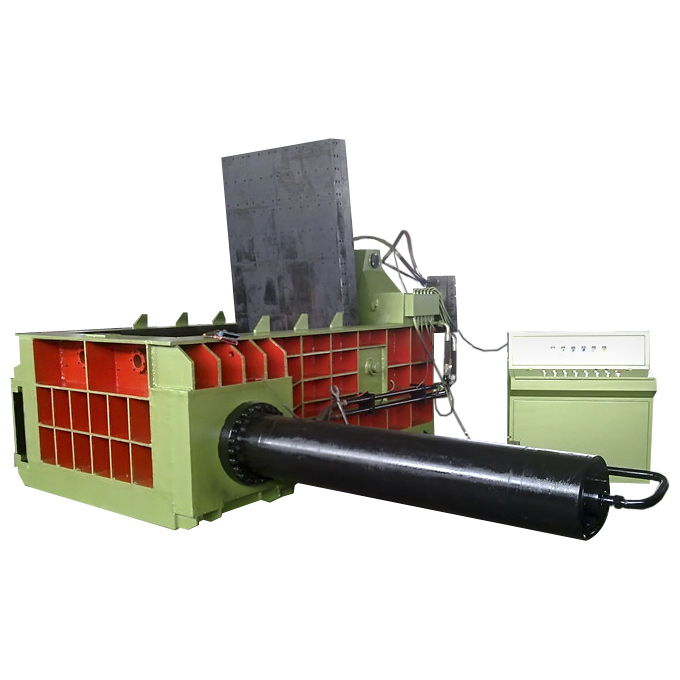
Conducting dimensional and weight audits prevents installation nightmares. Cross-reference the physical machine footprint against your original purchase order. Measure the chamber dimensions meticulously. Confirm the total machine tonnage. A heavier frame usually indicates thicker steel plates and a more robust build. Match these physical measurements directly to your requested scrap metal baler machine specifications. Any negative deviation in overall weight suggests unauthorized material downgrades.
Steel quality and weld integrity dictate equipment lifespan. Baling chambers endure immense, repetitive stress daily. You must evaluate the construction quality using a systematic approach.
Check all high-stress connection points for continuous, slag-free welding.
Inspect the main cylinder mounts for any signs of porosity or undercutting.
Examine the baling chamber walls for proper reinforcement ribbing.
Verify the thickness of the replaceable internal wear plates.
Confirm the manufacturer used HARDOX or an equivalent abrasion-resistant (AR) steel grade.
Special attention is required when auditing a custom scrap metal baler machine. Ensure engineers implemented all non-standard modifications precisely. Check specialized hopper feeds for correct loading angles. Confirm any unique footprint constraints match the approved layout drawings. Custom builds carry higher execution risks. Do not assume the factory followed the bespoke blueprints without verifying every single dimension.
The Hydraulic Power Unit (HPU) acts as the heart of your recycling equipment. Inspect it thoroughly during the FAT. Look closely at hydraulic cylinders, manifold blocks, and external hoses. They require standardized, internationally recognized fittings. Ensure there are absolutely zero signs of pre-shipment weeping. Fluid leaks at this stage indicate poorly seated seals or contaminated oil. Verify the actual oil tank capacity matches the manual. Confirm the presence of adequate cooling systems. Air or water coolers are mandatory for continuous operation. Filtration setups also require careful review to maintain long-term fluid health.
Electrical and PLC panel compliance is equally critical. Open the main control cabinet. Ensure internal components match the specified tier-one brands. Look for contactors, relays, and PLCs from companies like Siemens, Schneider, or Omron. These brands guarantee local replacement availability if parts fail later. Cheaper, unbranded components lead to extended downtime when replacements prove impossible to source locally.
Inspection Chart: Hydraulic Power Unit Stress Points
Component | Inspection Focus | Failure Indicator |
|---|---|---|
Main Cylinders | Seal integrity and rod alignment | Visible oil weeping, scoring on rods |
Manifold Blocks | Valve seating and port connections | Pressure drops during hold cycles |
Cooling System | Heat exchanger capacity | Oil temperature exceeding 60°C quickly |
Filtration Unit | Micron rating and bypass sensors | Missing visual or electrical clog indicators |
Check for proper wire labeling throughout the cabinet. Every wire must have a visible tag corresponding to the schematic. International safety compliance, such as CE or UL ratings, remains non-negotiable. Finally, test the functionality of all emergency stop (E-stop) circuits. Press them while the machine is running empty. They must halt the hydraulic system instantly without delay.
Never accept a machine based on static inspections alone. Demand a comprehensive no-load test first. Run the machine empty for a continuous 30 to 60 minutes. This dry cycle reveals underlying mechanical issues. Monitor operating temperatures closely as the hydraulic oil warms up. Record baseline noise levels to check for abnormal pump whining. Watch the cylinder alignment carefully. They must ensure smooth directional movement without any binding, stuttering, or jerky motions.
The factory must process actual materials next. This wet cycle test proves real-world capability. If you are evaluating a steel recycling scrap metal baler machine, demand heavy steel offcuts. Heavy Melting Scrap (HMS) works best for testing high-pressure limits. Do not let the manufacturer test the equipment using only light aluminum cans or loose copper wire. Soft materials will not expose pressure bypass issues or structural flexing.
You must record specific performance metrics during the wet cycle. Time the exact cycle speed from start to finish. Compare this real-world data directly to the promotional brochure. A reliable scrap metal baler machine will maintain consistent cycle speeds even under heavy load. Measure the final bale dimensions accurately using a tape measure. Weigh the resulting bale on a calibrated scale. Confirm it meets your specific target density requirements. If the bale is loose or easily breaks apart, the hydraulic system is failing to reach maximum compression force.
Physical inspections represent only half the battle. Technical documentation handover is equally vital for long-term success. Do not sign the final acceptance form until you receive complete manuals. The operating manual must be clear and translated into your primary language. Hydraulic and electrical schematics are absolutely crucial. Local technicians cannot troubleshoot complex electrical faults without accurate wiring diagrams. Request all civil foundation drawings early so you can prepare your facility floor.
Verify your spare parts inventory before the crates get nailed shut. Confirm the inclusion of all agreed-upon consumables. Check the packing list carefully. Look for replacement O-rings, complete cylinder sealing kits, and extra limit switches. Missing spares cause frustrating delays during the initial commissioning phase.
Proper packaging and rust prevention protect your investment during transit. Confirm the factory applied thick anti-rust treatments on all exposed cylinder rods. Cosmoline or similar protective greases work well. Verify the equipment is properly secured to the shipping skids. Ensure workers tarp the machine securely. Flatbed transport or containerized ocean freight exposes bare metal to harsh, salty environments. Saltwater causes severe pitting on precision hydraulic rods within weeks. Demand desiccant bags inside the electrical cabinets to prevent internal moisture buildup.
Skipping the pre-shipment inspection to save a few days on lead time is a dangerous false economy. You risk importing a flawed machine requiring massive local repairs. Maintain a highly skeptical, evidence-based approach throughout the purchasing process. If a supplier refuses to perform a rigorous wet test run, view it as a major compliance red flag. They likely know the machine will fail under load.
Your immediate next step is creating a standardized process. Draft an inspection checklist appendix today. Attach this detailed document directly to your initial supplier contract. Force the manufacturer to acknowledge the testing standards before you send the deposit. Taking control of the inspection phase guarantees you receive exactly what you paid for.
A: Yes, but you must stipulate strict recording rules. The video must be continuous and completely unedited. Require the factory to show the machine's engraved serial number clearly. Include a running timer in the frame. They must demonstrate a full wet-run cycle using tough materials to prevent deceptive editing.
A: Immediately issue a formal Non-Conformance Report (NCR). Detail the exact deviations from your contract specifications. Withhold your final payment entirely. Wait until the factory provides clear video or in-person proof of the localized repair before authorizing any shipping arrangements.
A: It is highly recommended if you process niche or highly resilient alloys. For standard materials, demand the factory source equivalent local scrap. They should easily find specific gauges of steel or copper wire locally to prove the machine's capability.
A: You should negotiate this early during the contract phase. Typically, reputable manufacturers absorb the cost of test materials and hydraulic oil. They treat this expense as part of their standard Quality Control overhead.


