


Views: 0 Author: Site Editor Publish Time: 2026-10-24 Origin: Site


Standard painted steel balers degrade rapidly in wet, corrosive, or high-sanitation environments. Food processing plants, chemical facilities, and offshore rigs often destroy conventional equipment within mere months. Paint flakes off quickly under stress, exposing the mild steel frame to aggressive rust and sudden structural failure.
Upgrading to a Stainless Steel Baler solves these critical operational challenges immediately. It protects your operational uptime by resisting harsh environmental elements day after day. It also ensures strict regulatory compliance in hygiene-sensitive zones where bacteria cannot be tolerated. Furthermore, it maximizes scrap density to boost transport efficiency across your logistics chain.
Is this premium investment justified for your specific facility? We will explore the material benefits, machine configurations, and financial realities to guide your final decision. You can use this evaluation framework to match your unique operational constraints with the exact equipment required.
Corrosion Resistance: Stainless steel eliminates rust and degradation caused by organic waste, liquids, and harsh chemical washdowns.
Regulatory Compliance: Essential for food-grade, pharmaceutical, and marine environments requiring strict hygiene standards and zero cross-contamination.
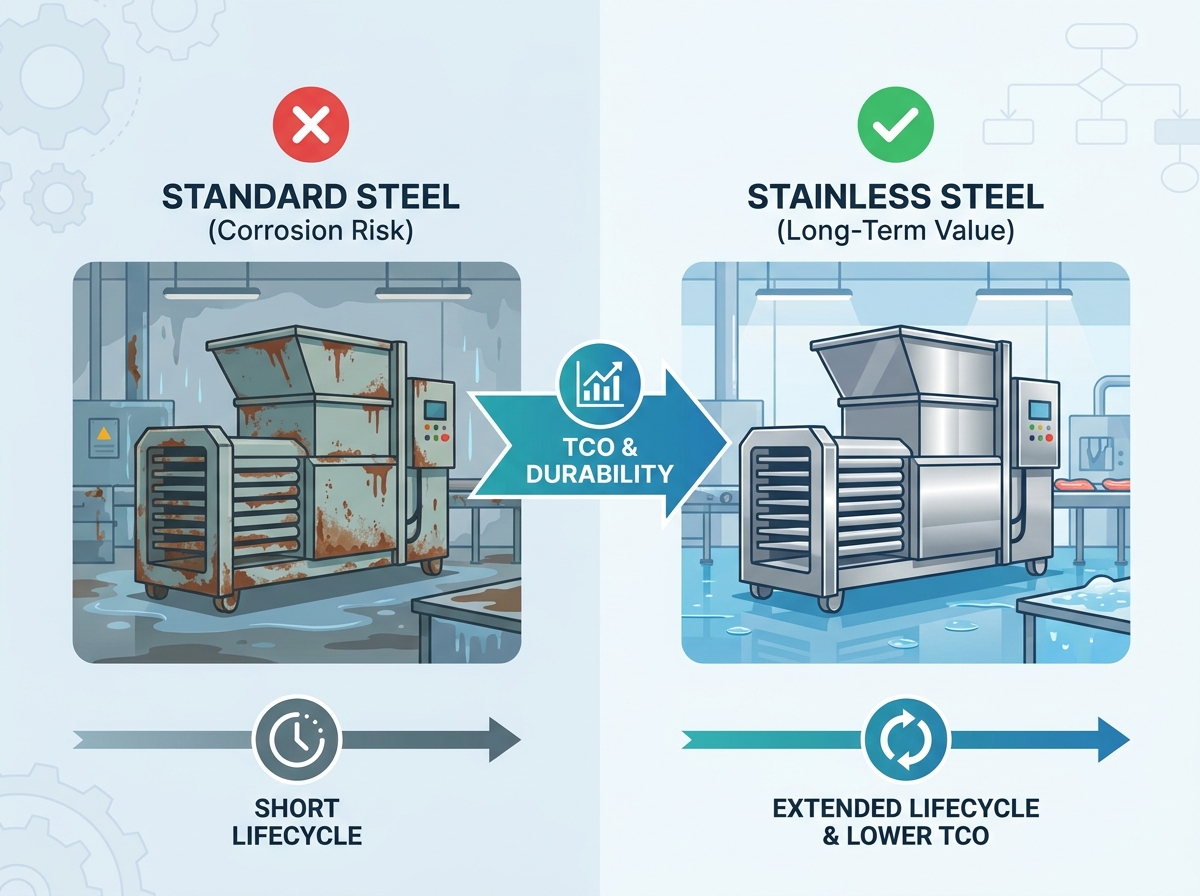
Optimized TCO: While upfront costs are higher, the extended lifespan and reduced maintenance yield a lower Total Cost of Ownership (TCO) in harsh environments.
Configuration Flexibility: Available in various footprints—from a heavy-duty industrial setup to a manual or compact system—to match volume and spatial constraints.
Many facility managers notice standard balers failing rapidly under specific stress conditions. The breakdown point usually begins invisibly. A small scratch on the powder coating exposes the mild steel beneath. Moisture from the environment penetrates this tiny gap immediately. Structural oxidation begins weakening the frame from the inside out. Eventually, the metal bows under pressure. Furthermore, hydraulic systems face severe contamination risks when rust flakes enter fluid reservoirs, destroying sensitive pump seals.
Wet waste presents entirely different processing challenges. Facilities handling organic matter deal constantly with liquids. Closed-end stainless designs offer superior sealing capabilities. They prevent material leakage during the intense compaction process. This keeps the surrounding floor clean, dry, and safe for operators. You avoid creating dangerous slip hazards or breeding grounds for pests. Standard machines simply cannot contain these liquids effectively, leading to messy, non-compliant workspaces.
Achieving maximum bale density improves your transportation efficiency dramatically. Haulers charge based on volume and weight limits. When you produce dense, heavy bales, you load transport trucks more efficiently. You lower downstream logistics costs for scrap and waste management significantly. Using an Industrial Stainless Steel Baler guarantees consistent compaction force without the risk of structural bowing. You stop paying to ship empty air and maximize the payload of every single truck leaving your loading dock.
Common Mistake: Operators often try to retrofit standard painted machines with external drip trays to handle wet waste. This fails because the internal chamber still rusts aggressively, contaminating the compacted material and eventually compromising the main hydraulic rams.
Understanding the metallurgical differences helps you specify the correct machine for your exact needs. You must distinguish carefully between 304 and 316 stainless steel grades. Grade 304 resists basic moisture, organic waste, and mild cleaning agents perfectly. It serves as the standard for many commercial kitchens. Grade 316 includes a vital molybdenum addition. This specific element actively resists highly corrosive agents like harsh marine salts, aggressive acids, and strong alkalis. It forms a passive protective layer that stops pitting corrosion instantly.
Sanitation protocols demand absolute washdown compatibility. High-pressure washing requires smooth, non-porous surfaces. Painted steel develops microscopic pits and cracks over time. These pits harbor dangerous bacteria that survive standard cleaning cycles. A solid stainless chamber focuses entirely on the elimination of bacterial harbor points. This feature is strictly required in food processing, pharmaceutical manufacturing, and medical waste recycling sectors.
Material Grade | Corrosion Resistance | Ideal Application Environment | Sanitation Rating |
|---|---|---|---|
Standard Mild Steel | Low (relies entirely on paint) | Dry warehouse, cardboard recycling | Poor (develops harbor points) |
304 Stainless Steel | High (resists moisture/mild acids) | Commercial kitchens, standard food prep | Excellent |
316 Stainless Steel | Extreme (resists chlorides/salts) | Marine vessels, chemical plants | Superior |
Let us look at lifecycle and uptime data. Evidence shows a clear comparison in hardware replacement cycles. Mild steel machines placed in identical caustic environments often suffer complete structural degradation within five years. The constant exposure eats through the base plates and chamber walls. Conversely, a solid stainless frame operates reliably for 15+ years under the exact same conditions. You save immense capital over time by avoiding frequent equipment replacements and unscheduled operational downtime.
Matching the machine configuration to your facility layout is essential for operational success. Different waste volumes and physical footprints require highly specific engineering solutions.
Success in heavy industry requires massive high-volume throughput and relentless compaction power. These machines feature extra-large feed openings to accept bulky materials instantly. Automated ejection systems remove finished bales without manual intervention, keeping cycle times incredibly short.
We recommend a Heavy Duty Stainless Steel Baler for large-scale industrial recycling. Continuous manufacturing processes generate byproducts constantly. You need a robust system built for relentless 24/7 operation. They handle dense plastics, metal offcuts, and heavy organic waste without jamming or overheating.
Success in tight spaces demands high compaction force delivered inside a severely restricted footprint. You need equipment you can integrate easily into existing production lines without disrupting worker flow.
A Compact Stainless Steel Baler fits perfectly in modern urban facilities. Commercial kitchens and medical cleanrooms face strict floor space limits. They benefit immensely from powerful hydraulic compaction without losing valuable operational real estate. You can place them directly at the source of the waste generation.
Success relies heavily on mobility across the facility floor. You need simple plug-and-play power requirements to move the machine quickly. Many portable units operate efficiently on standard single-phase power connections, eliminating the need for complex electrical hardwiring.
Marine vessels often use a Portable Stainless Steel Baler to manage waste at sea safely. Multi-station food processing plants roll the machine directly to the active production line. This drastically reduces internal material handling time and prevents cross-contamination across different facility zones.
Success criteria here center on mechanical simplicity and maximum operator safety. You want zero hydraulic fluid risks near sensitive materials. Manual controls provide precise operation for small, delicate batches of waste.
A Manual Stainless Steel Baler excels in low-volume specialty chemical handling. Explosive environments strictly forbid electrical sparks or standard hydraulic motors. A purely manual mechanical system guarantees safety where non-sparking, non-electric operation is legally required by safety inspectors.
We must provide a transparent cost assessment before you procure new equipment. You must acknowledge the premium upfront capital expenditure (CapEx) involved. Carbon steel machines cost significantly less on day one. Stainless steel requires a substantial initial financial investment due to the high cost of the raw alloy materials and specialized welding processes.
However, hidden implementation risks can ruin this investment if ignored. You must use compatible stainless-steel tying wire for your bales. Mixing regular carbon steel wire with a stainless chamber causes rapid galvanic corrosion. The dissimilar metals react chemically when exposed to moisture, severely degrading the machine walls. Always specify the correct strapping material during your procurement phase.
Furthermore, you must address hydraulic fluid requirements proactively. Compliance-heavy setups demand specialized food-grade hydraulic fluids. If a high-pressure hose bursts, standard industrial oil will ruin an entire production batch and trigger a massive recall. Food-grade fluids prevent catastrophic regulatory violations and protect your brand reputation.
Finally, let us clarify long-term maintenance assumptions. The stainless structure reduces frame maintenance almost entirely. You will not spend weekends grinding rust or repainting surfaces. Yet, the internal hydraulic and electrical components still require standard preventive maintenance schedules. You must replace oil filters, check cylinder seals, and lubricate moving mechanical joints regularly to ensure peak performance.
Follow this structured checklist to ensure a successful and compliant procurement process:
Volume & Density Requirements: Calculate your daily waste generation accurately. Compare this data against your desired finished bale weight. Always factor in your specific transport provider's payload limits to maximize shipping efficiency.
Environmental Assessment: Audit your operational environment thoroughly. Measure ambient moisture levels constantly. Document specific chemical exposure types (like chlorides or acids). Record temperature extremes. These variables dictate the exact steel grade you need to purchase.
Safety & Compliance Standards: Verify all required certifications beforehand. Ensure strict CE and OSHA compliance for operator safety. Confirm FDA/USDA facility standards if your operation touches human or animal consumables at any point.
Next-Step Action: Schedule a comprehensive site audit with an equipment engineer. Request a physical material test from the manufacturer. You must validate actual compaction ratios on your specific waste before signing any procurement contracts.
A specialized stainless equipment upgrade acts as a long-term operational asset. It guarantees structural longevity and strict regulatory compliance in harsh environments where standard equipment fails rapidly. You protect your production lines from sudden downtime while maintaining the highest hygiene standards possible.
We strongly advise evaluating your internal waste data today. Map out your physical facility layout as the immediate next step. This helps identify your exact spatial constraints and determines which machine footprint fits your workflow best.
Promptly contact an engineering specialist to request a customized capacity assessment. A professional evaluation will compare upfront capital costs against long-term lifecycle savings, pinpointing exactly which configuration maximizes your facility's operational efficiency.
A: Grade 304 offers excellent basic corrosion resistance for wet environments and mild acids. Grade 316 includes a specific addition of molybdenum. This crucial element provides extreme resistance to chlorides, marine salts, and harsh industrial chemicals. Marine environments and caustic washdown zones strictly require 316 to prevent rapid pitting and metal degradation.
A: Yes, but total volume per cycle is limited. Compact balers generate high hydraulic cylinder force to crush heavy scrap effectively. However, their smaller chamber size restricts the physical dimensions of the waste you can feed at one time. They suit dense, heavy materials processed in smaller, continuous batches.
A: Yes. Using standard carbon steel wire triggers galvanic corrosion when it rubs against the stainless chamber walls. This damages the machine severely over time. We highly recommend using plastic strapping, specialized isolated galvanized ties, or compatible stainless steel wire to protect your heavy equipment investment.
A: A stainless machine typically demands a 40% to 80% higher upfront capital expenditure than mild steel alternatives. However, this premium eliminates frequent structural replacements and frame repairs. In highly corrosive environments, the extended operational lifespan and drastically reduced downtime quickly justify the initial price difference through lifecycle savings.


