


Views: 0 Author: Site Editor Publish Time: 2026-11-06 Origin: Site


A Horizontal Metal Baler serves as a critical revenue center for modern scrap yards and large-scale recycling facilities. Mechanical failures in these machines directly translate to lost production hours and exceptionally high emergency repair costs. Let us avoid the myth of the perfect machine. All heavy-duty hydraulic equipment experiences continuous wear and tear when processing harsh, abrasive metals daily. Ignoring early warning signs inevitably leads to catastrophic breakdowns and unacceptable operational downtime. This guide delivers a transparent, engineering-focused breakdown of the most frequent operational failures you will encounter. We will explore the mechanical root causes and provide verifiable solutions for each issue. Facility managers and buyers will learn how to evaluate long-term reliability, establish better purchasing criteria, and optimize daily maintenance schedules effectively.
Hydraulic pressure loss and fluid contamination account for the majority of sudden downtime in metal baling operations.
Structural wear on shear blades and liner plates accelerates when processing unsorted or overly dense scrap materials.
Many recurring "equipment failures" are actually rooted in operator error, particularly overloading the hopper or bypassing sensor maintenance.
When evaluating a new horizontal metal baler, prioritizing standardized PLC components, accessible hydraulic blocks, and heavy-duty steel plate construction reduces lifetime maintenance costs.
Gradual or sudden loss of baling force severely disrupts daily operations. Cycle times extend as the machine struggles to compress materials. You begin producing loose, inconsistent bales. Smelters and buyers frequently reject these low-density bundles. Ultimately, a stalling ram brings the entire processing line to a halt.
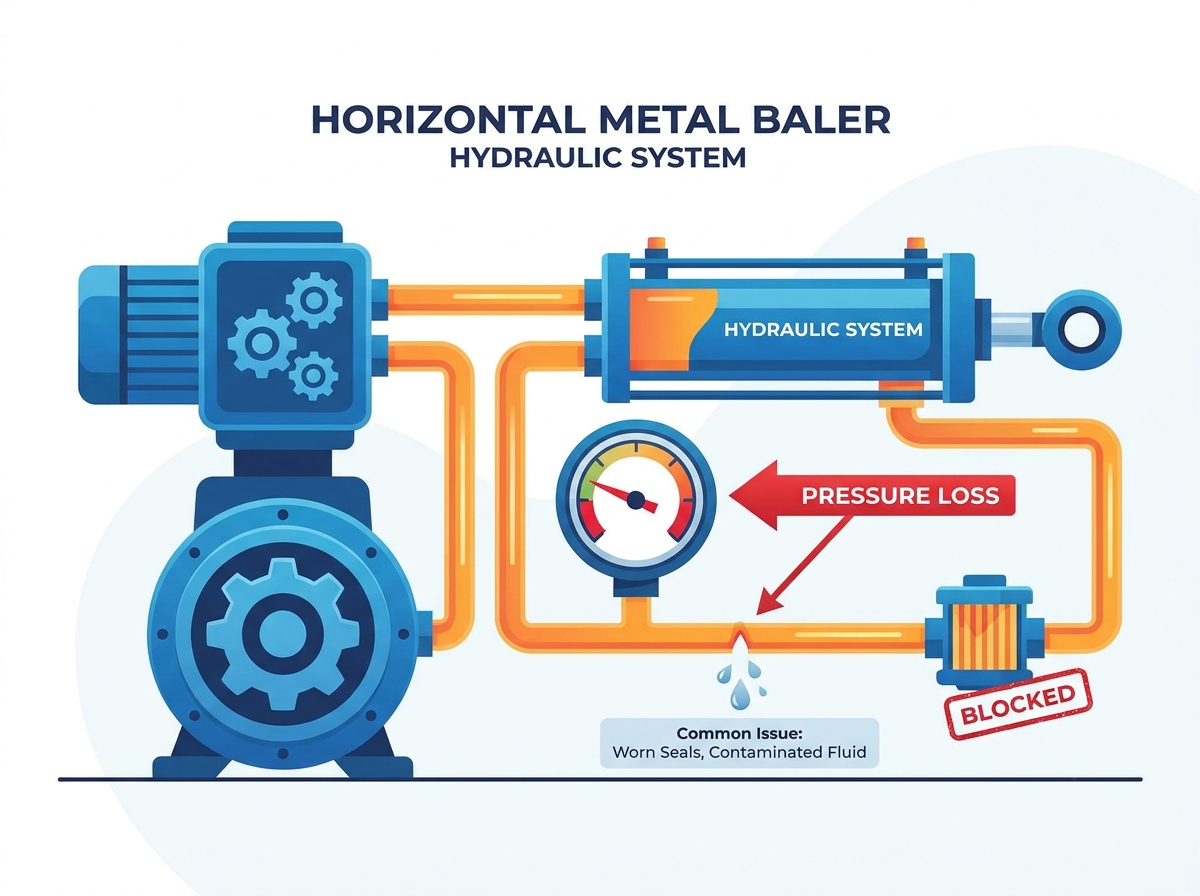
Understanding the physics behind pressure loss helps you prevent recurring issues. The primary culprits typically involve fluid dynamics and seal integrity.
Worn cylinder seals: Constant friction degrades polyurethane and Teflon seals. This degradation allows hydraulic fluid to bypass the piston internally. The pump generates pressure, but the fluid slips past the seal instead of moving the ram.
Contaminated hydraulic fluid: Dirt and metal shavings act like liquid sandpaper. They degrade pump internals rapidly. This contamination often stems from breached breather caps or poor filtration practices.
Overheated oil: Excessive heat destroys the chemical composition of hydraulic fluid. As temperatures rise, oil viscosity drops. Thin oil causes system efficiency to plummet, leading to sluggish ram movement.
Addressing hydraulic issues requires a mix of immediate action and proactive engineering upgrades. Do not rely on guesswork when dealing with high-pressure systems.
Implement routine fluid analysis every six months. You must check particle counts and moisture levels rigorously. Laboratory analysis reveals internal pump wear long before catastrophic failure occurs. If the ISO cleanliness code drops below acceptable levels, filter or replace the fluid immediately.
Upgrade to automated, thermostatically controlled cooling systems. High-capacity air or water coolers keep fluid temperatures within the optimal range. Furthermore, specify high-micron return line filters. Better filtration ensures only clean oil re-enters the main reservoir.
When shopping for equipment, scrutinize the hydraulic architecture. Look for machines featuring manifold-block hydraulic designs. Manifold blocks consolidate valving and minimize exposed hosing. Fewer hoses mean fewer potential leak points and much easier diagnostic testing.
Scrap metal remains a highly abrasive and unforgiving material. Premature wear on the baling chamber leads to frequent material jamming. You will also notice highly uneven bale densities. If ignored, uneven wear causes catastrophic main cylinder misalignment, requiring massive structural repairs.
Heavy machinery faces constant friction. Structural failures rarely happen overnight; they result from progressive degradation.
Degraded wear liners: The friction plates inside the compression chamber take immense abuse. Once these liners thin out, the ram develops excessive play.
Dulling of the shear blades: Many balers feature shear blades to trim oversized scrap. Dull blades cause material to fold rather than cut cleanly. This folding action forces the ram off-center, placing immense lateral stress on the cylinder rods.
Maintaining tight structural tolerances prevents the ram from drifting. Regular mechanical inspections keep your equipment running true.
Establish a strict gap-tolerance checking schedule for your shear blades. Operators must measure clearance weekly using feeler gauges. You should rotate or replace blades long before they round off completely.
Utilize auto-lubrication systems for the main ram track. Automated greasing reduces the friction coefficient significantly. Manual greasing often gets skipped during busy shifts, but an automated system ensures constant protection.
Demand machines built with replaceable Hardox® or equivalent high-tensile steel wear liners. Bolted liners allow your maintenance team to swap out worn plates easily. Avoid welded-in liners, as they require full chamber rebuilds and specialized welding contractors.
Component | Warning Signs | Inspection Frequency | Required Action |
|---|---|---|---|
Shear Blades | Material folding, loud banging noises during compaction. | Weekly | Measure gap tolerance; rotate or replace blades if rounded. |
Chamber Liners | Deep gouges, excessive ram movement (wobble). | Monthly | Check plate thickness; schedule replacement if below minimum spec. |
Ram Guides | Grinding sounds, metallic dust accumulation. | Daily | Verify auto-luber function; clear debris from guide tracks. |
Nothing frustrates a yard manager more than a machine that appears mechanically sound but refuses to cycle. Trapped material halts production completely. You often must hire costly, specialized electrical technicians simply to diagnose the issue.
Modern balers rely heavily on sensors and logic controllers. These delicate components must survive in a brutal industrial environment.
Misaligned sensors: Heavy machine vibration routinely knocks limit switches and proximity sensors out of alignment. Furthermore, inductive sensors often fail when covered in conductive metallic dust.
PLC controller faults: Programmable Logic Controllers (PLCs) govern the machine sequence. They suffer from factory voltage spikes, power surges, or degraded wiring harnesses.
Electrical reliability depends on isolation and cleanliness. Protecting your sensors and controllers eliminates phantom faults.
Isolate the main control panel from direct machine vibration. Mount panels on isolated stands if possible. Additionally, operators must blow out sensor housings daily using clean compressed air. Removing metal dust prevents false proximity readings.
Install robust voltage regulators at the main power drop. Stable voltage protects sensitive PLC processors. Ensure all external wiring runs through heavy-duty armored conduit. Exposed wires inevitably get crushed by falling scrap or forklift traffic.
Avoid proprietary, "black-box" software at all costs. Some manufacturers lock their code, forcing you to use their expensive technicians. Ensure the machine uses standardized, off-the-shelf PLC components from major brands like Siemens or Allen-Bradley. Standard parts guarantee easy local sourcing and straightforward troubleshooting.
Equipment damage caused by improper usage quickly voids manufacturer warranties. Poor operator habits create highly unpredictable maintenance schedules. You cannot engineer your way out of bad daily practices.
Operators push machines to the limit trying to meet production quotas. This urgency often leads to careless loading procedures.
Overfeeding the hopper: Dumping too much material at once causes bridging. Scrap tangles together and jams above the chamber, causing the main ram to stall under immense pressure.
Introducing non-compressible materials: Operators sometimes drop heavy I-beams, solid steel billets, or engine blocks into a machine rated only for light aluminum. This instantly damages shear blades and bends cylinder rods.
Training and strict operational protocols represent your best defense against human error.
Implement a strict material grading and pre-sorting Standard Operating Procedure (SOP) before scrap reaches the conveyor. You must designate an inspector to catch dangerous materials. Follow these steps:
Visually inspect all incoming piles for solid steel chunks.
Use a grapple excavator to shake out loose, dense anomalies.
Load the feed conveyor in steady, even batches rather than massive clumps.
Halt the conveyor immediately if a prohibited item slips through.
Train your operators on acoustic diagnostics. Good operators know exactly what a "healthy" hydraulic cycle sounds like. They should instantly recognize the high-pitched squeal of a straining pump or a relieving valve. Empower them to stop the machine when it sounds wrong.
Opt for machines featuring advanced optical sensors or weigh-scale integration on the feed conveyor. Weigh-scales automatically pause the belt when the hopper reaches maximum capacity. This technology prevents accidental overloading entirely, removing the burden from the operator.
How do you translate these common problems into a strict procurement checklist? Upgrading or buying new equipment requires a methodical approach. You must evaluate machines based on lifetime operational stability, not just the initial purchase price.
Are the hydraulic pumps and cylinders easily accessible? Ask the dealer to show you the maintenance points. If mechanics must dismantle the entire chassis just to reach a leaking valve, your downtime costs will skyrocket. The best designs feature external, ground-level hydraulic power units.
Does the manufacturer guarantee local parts availability? Some overseas brands offer cheap machines, but replacement components carry 12-week import lead times. Ensure the manufacturer stocks critical cylinders, valves, and PLC modules domestically.
Safety must dictate your purchasing decision. Does the machine feature standard lock-out/tag-out (LOTO) points? Check for interlocking safety gates around the jam-clearing zones. If an operator opens an access door, the machine must instantly dump hydraulic pressure. Never compromise on OSHA-compliant safety features.
Feature Category | Standard Equipment Risk | Premium Equipment Benefit |
|---|---|---|
Hydraulic Cooling | Basic radiator clogs easily, leading to overheated oil. | Thermostatic chillers maintain exact viscosity, extending pump life. |
Chamber Wear Liners | Welded mild steel requires heavy fabrication to replace. | Bolted Hardox® plates allow fast, in-house replacements. |
PLC Controls | Proprietary boards require expensive factory tech visits. | Off-the-shelf Siemens/Allen-Bradley parts allow local repairs. |
Material Feeding | Manual loading heavily depends on operator judgment. | Conveyor weigh-scales automatically prevent hopper bridging. |
Before signing any purchase order, demand proof of reliability. Advise your procurement team to request a localized reference list from the manufacturer. Call facility managers who operate the exact model you want. Ask them to verify real-world uptime claims. Ask them how fast the OEM responds to warranty claims.
A high-quality Horizontal Metal Baler proves incredibly robust when managed correctly. However, these machines require disciplined maintenance and highly informed operation to deliver consistent return on investment. By anticipating the four major fault categories—hydraulic, mechanical, electrical, and operator-induced—you actively protect your capital investment.
Remember, prioritizing standardized components, implementing rigid fluid analysis, and enforcing strict material sorting protocols eliminates the vast majority of sudden breakdowns. Proactive management transforms a chaotic maintenance schedule into a predictable, manageable process. Stop reacting to emergencies and start engineering them out of your workflow.
Evaluate your current downtime costs closely. Track your lost hours and emergency repair bills. If your current machine struggles with constant faults, contact a specialized technical sales engineer today. Discuss upgrading to a more reliable, easily serviceable baling solution designed for modern recycling demands.
A: A well-maintained machine typically lasts 10 to 15 years, and often longer. This lifecycle remains highly contingent on your maintenance discipline. Strict adherence to hydraulic fluid changes, timely wear liner replacements, and proper operator training significantly extend the operational lifespan of the chassis and cylinders.
A: Industry baselines suggest replacing fluid every 2,000 to 3,000 operating hours. However, you should never rely on blind replacement. Routine fluid analysis provides the best guidance. If laboratory results show low particle counts and stable chemical properties, you can safely extend the fluid lifespan.
A: Loss of compression force primarily stems from hydraulic inefficiencies. The most common causes include severe cylinder seal degradation allowing fluid bypass, main relief valve failures, and internal pump wear caused by contaminated oil. Addressing these issues immediately restores baling force.
A: Yes, many machines can process both. However, machine settings like pressure thresholds and shear force requirements differ drastically between materials. Wear profiles also change. Processing heavy ferrous scrap accelerates liner wear faster than aluminum. Dedicated machines remain optimal for highly specialized scrap yards.


