


Views: 0 Author: Site Editor Publish Time: 2026-09-17 Origin: Site


Purchasing a heavy-duty baling machine is a critical capital expenditure for any industrial recycling facility. Equipment mismatch or supplier unreliability quickly leads to severe operational bottlenecks. These operational delays can instantly cripple your processing capacity and damage downstream profitability. Bulk buyers face immense complexity navigating this industrial landscape. You must carefully manage cross-border procurement challenges and strict import compliance regulations. You also carry the long-term burden of demanding lifecycle maintenance requirements. This checklist serves as an evidence-based, decision-stage framework tailored for procurement professionals. You will learn exactly how to evaluate core equipment specs and rigorously audit potential manufacturing partners. We will also help you accurately calculate your true return on investment to ensure sustainable, long-term profitability.
Accurate assessment of daily throughput directly dictates necessary pressure tonnage and cycle times.
Verifying structural integrity and specific hydraulic components prevents premature equipment failure in high-load environments.
A reliable supplier must provide transparent certifications (CE/ISO) and documented after-sales technical support.
Evaluating ROI requires calculating power consumption, expected downtime, and consumable wear, not just the upfront machine price.
Failing to accurately project your scrap volume often leads to negative financial outcomes. You risk either overcapitalization on unnecessary capacity or creating severe equipment bottlenecks. Precision matters immensely when selecting heavy recycling machinery. You must first define your exact material inputs before reviewing any equipment catalogs. Aluminum extrusions behave quite differently under intense pressure than steel turnings or thick copper wire. Each unique metal type requires specific handling protocols to achieve your required output density.
Establish realistic daily volume expectations based on hard data. You must gather historical processing data focusing on your peak scrap generation days. You should also account for seasonal variations in scrap volume. This precise data justifies the substantial investment needed for a high-volume scrap hydraulic metal baler. If your facility consistently processes over 50 tons of heavy metal daily, entry-level models will fail prematurely under the strain.
Buyers frequently fall into the trap of accepting dry-run marketing metrics. You must instruct vendors to provide cycle time data captured strictly under full load conditions. A machine might boast an impressive 90-second dry cycle in a promotional video. However, compressing high-yield steel turnings can easily push that exact cycle to 150 seconds or more. Relying on real-world testing data protects your operational timelines and prevents unexpected processing backlogs.
Equipment longevity relies entirely on rigorous component scrutiny. You must break down the core hydraulic metal baler specifications to ensure operational safety and sustained performance. Never assume standard specifications meet high-volume demands.
The main hydraulic cylinder determines your absolute operational ceiling. You need to meticulously match the required pressure tonnage to your specific scrap metal yield strength. For example, a 100-ton press works perfectly well for thin aluminum cans and soft copper wire. In stark contrast, heavy steel offcuts demand at least a 315-ton press to achieve stable compaction without ram stalling. You should also deeply assess the cylinder sealing technologies. High-quality sealing kits from trusted brands like NOK or Parker prevent costly hydraulic fluid leaks and maintain consistent pressure.
Your bale dimensions must align seamlessly with your downstream logistical constraints. If you export scrap overseas, the bale size must optimize shipping container space to reduce astronomical freight costs. Foundry customers also frequently dictate specific bale sizes so the metal easily fits inside their furnace doors. A physical mismatch here inevitably requires expensive, labor-intensive manual repacking.
Continuous lateral stress destroys under-engineered machine frames. You must verify the use of premium wear plates inside the main compression chamber. Industry standards require heavy-duty high-manganese steel or Hardox liners. We strongly warn against purchasing machines built using standard mild steel plates. They will warp, tear, and degrade within the very first year of high-load operation.
Scrap Material Type | Recommended Pressure Tonnage | Required Wear Plate Material | Cooling System Requirement |
|---|---|---|---|
Aluminum Cans / Light Extrusions | 100 - 150 Tons | Standard High-Manganese Steel | Standard Air Cooling |
Mixed Copper Wire / Radiators | 150 - 250 Tons | Hardox 400 | Air or Water Cooling |
Heavy Steel Turnings / Castings | 315+ Tons | Hardox 450 / Hardox 500 | Industrial Water Cooling |
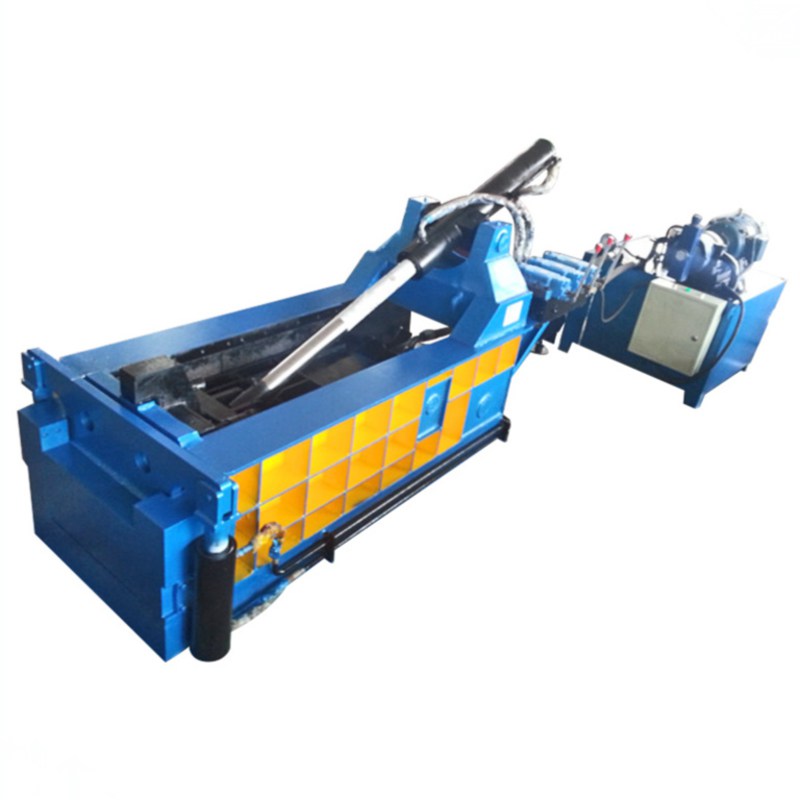
Standard off-the-shelf machines work reasonably well for generic recycling facilities. However, bespoke engineering often becomes necessary for complex or high-capacity operations. You must successfully identify the specific operational scenarios requiring a custom hydraulic metal baler to avoid integration headaches later.
Customization triggers often include unusual feed hopper dimensions. If you process bulky aerospace scrap or long metal pipes, standard hoppers will constantly jam. Automation integration needs also heavily drive customization. You might need the press to synchronize perfectly with your existing magnetic conveyor systems or automated sorting lines. Specific physical footprint constraints within older, cramped factories also force bespoke chassis designs.
You must carefully weigh the engineering trade-offs. Custom builds naturally require extended lead times and carry higher premium costs. Off-the-shelf units ship much faster but may severely throttle your overall operational efficiency if they do not fit your workflow perfectly.
Risk mitigation remains crucial during this design phase. Before any physical manufacturing begins, ensure the manufacturer provides fully customized CAD drawings. You should also demand detailed hydraulic schematics and electrical layouts. Your internal engineering team must carefully approve these documents. Catching flaws on paper prevents catastrophic and costly mid-production modifications.
Smart buyers move far beyond basic product specification sheets. You must critically evaluate the institutional reliability of your chosen hydraulic metal baler supplier. Vendor vetting effectively separates reliable long-term partners from high-risk sellers. Sourcing an industrial hydraulic metal baler requires a strict, evidence-based audit process.
First, aggressively examine their factory capabilities. Do they outsource critical fabrication steps? You should establish strict criteria for auditing their true production capacity. Look for high-end CNC machining centers and rigorous in-house testing protocols. Factories running 24-hour continuous pressure tests on their cylinders demonstrate a strong commitment to quality control.
Importing heavy machinery involves serious compliance hurdles. International buyers desperately need a definitive compliance checklist. Verify the physical presence of a legitimate CE mark for European markets. Confirm active ISO 9001 certification to ensure standardized management practices. Electrical standard compatibility remains non-negotiable; North American buyers must strictly check for UL or CSA approved electrical panels powered by recognizable components like Siemens or Schneider Electric.
Finally, heavily scrutinize the after-sales infrastructure. Do not accept vague verbal promises regarding maintenance. Demand clear Service Level Agreements (SLAs) dictating spare parts availability and guaranteed shipping times. Verify they offer competent, English-speaking technical support. Modern suppliers should also seamlessly provide remote troubleshooting capabilities via secure PLC internet modules.
Move past the top-line equipment price. A cheaper machine often rapidly destroys profitability through excessive downtime and constant repairs. You must reframe your investment strategy through transparent, evidence-oriented financial assumptions.
When calculating true return on investment, focus heavily on the following core metrics:
Energy Efficiency: Energy consumption directly impacts your monthly overhead. Evaluate the motor and pump configurations carefully. Calculate exactly how many kilowatts the machine consumes per ton of compressed scrap. Advanced variable displacement pumps consume significantly less electricity than outdated fixed-gear hydraulic pumps.
Labor Reduction: Labor costs heavily drain facility budgets. Calculate your expected wage savings derived directly from machine automation. Features like auto-eject rams and continuous feeding conveyors effectively eliminate manual labor. Compare this new automated workflow against the high costs of manual tying, clearing, and loading.
Maintenance Consumables: Routine maintenance cannot be ignored. You must forecast the comprehensive 5-year operational cost. Factor in the volume and price of bulk hydraulic oil replacement (such as AW46 or AW68 grades). Include the strict frequency and price of high-pressure filter changes. Add the projected costs for scheduled heavy wear-plate replacements.
Physical rollout risks routinely catch unprepared buyers completely off-guard. You must address pre-installation realities weeks before the heavy equipment arrives at your receiving dock.
We recommend following this preparation sequence to avoid installation disasters:
Foundation Engineering: Heavy-duty machinery requires highly specialized foundations. You cannot simply place a 30-ton industrial press on standard 4-inch warehouse concrete. Structural engineers must precisely calculate both static and dynamic floor loading requirements. High-pressure cycling creates immense kinetic force. A weak foundation will quickly crack, causing severe machine misalignment and cylinder damage.
Power Infrastructure Planning: Your electrical grid needs early evaluation. Industrial presses demand incredibly heavy electrical draws during motor startup. You must ensure robust voltage stabilization and mathematically verify amperage requirements. Sudden power surges can instantly fry expensive PLC control boards if the facility grid remains unstable.
Operator Safety Protocols: Safety stands above all other production concerns. Ensure the strict integration of comprehensive safety interlocks to protect your workforce from crush hazards. Emergency stops must be strategically and visibly located around the entire machine perimeter. Finally, you must mandate rigorous operator training protocols. Strict adherence to these safety guidelines ensures full OSHA and local regulatory compliance.
A successful procurement process always balances robust technical specifications with rigorous supplier vetting. You simply cannot rely on glossy sales brochures alone to make a six-figure purchasing decision. Accurately assessing your throughput, demanding proper structural materials, and calculating energy efficiency will protect your investment.
We strongly advise your procurement team to rapidly narrow their vendor list to two or three top-tier suppliers. Prioritize manufacturing partners who willingly provide transparent component origins and verifiable international certifications. They should also confidently demonstrate a willingness to provide custom CAD integration for your specific facility layout.
Take immediate action to secure your operational future. Download a printable version of this evaluation checklist for your next vendor meeting. Request a highly detailed technical specification sheet from your shortlisted manufacturers. Alternatively, schedule a technical consultation today to thoroughly discuss your specific throughput requirements and facility constraints with an engineering expert.
A: Standard off-the-shelf balers typically require 30 to 45 days for manufacturing. However, fully custom builds often extend lead times to 60 or 90 days. You must also factor in ocean freight timelines, which add an additional 4 to 6 weeks depending on your geographical location and port congestion.
A: You should specifically check the brand names of the internal hydraulic pumps and directional valves. Insist on globally recognized brands like Rexroth, Parker, or Vickers. Additionally, always ask the supplier to provide unedited factory pressure test videos showing the cylinders operating under maximum load.
A: Manual balers require a dedicated operator to pull physical hydraulic levers for every single cycle, increasing labor costs and human error. PLC-controlled balers automate the entire compression sequence using brands like Siemens. This automation dramatically increases operational efficiency, lowers labor requirements, and ensures consistent precision.
A: Yes, reputable overseas suppliers generally offer a standard 12-month parts warranty covering major structural and hydraulic components. Before purchasing, it is crucial to confirm if they have local service partnerships. You should also ensure they offer fast-tracked DHL replacement for critical electrical or hydraulic parts.


