


Views: 0 Author: Site Editor Publish Time: 2026-08-27 Origin: Site


Purchasing industrial recycling equipment requires balancing upfront capital expenditure against long-term maintenance costs. Operational efficiency matters significantly when evaluating heavy machinery. We see a clear bottom-of-funnel reality for industrial procurement teams. Equipment investments directly dictate facility profit margins. A detachable metal baler solves specific logistical and operational hurdles. Manufacturers design these modular machines for simplified transport. They fit smoothly inside standard shipping containers. Localized assembly reduces complex rollout timelines. This makes them ideal for cross-border procurement. Restricted-access facilities benefit immensely from modular designs. This article provides a clear, objective framework. Technical buyers and facility managers need reliable engineering data. Procurement officers must compare scrap material compatibility accurately. You will learn to evaluate machine construction materials comprehensively. We also cover how to verify supplier reliability before committing to a major purchase.
Scrap Material Dictates Specs: The ratio of ferrous to non-ferrous metals determines the required hydraulic shear force and chamber dimensions.
Construction Materials Matter: High-yield abrasion-resistant (AR) steel and modular wear liners are non-negotiable for minimizing long-term expenses.
Logistics Drive ROI: The primary advantage of a detachable design is bypassing oversized cargo fees; evaluate standard container fit.
Supplier Due Diligence is Critical: A reliable manufacturer must provide standardized, non-proprietary replacement parts and clear compliance documentation.
You must establish the business problem framing accurately. Matching the input material to the machine processing thresholds prevents premature failure. Buyers often mistakenly prioritize price over material compatibility.
Heavy steel and iron scrap demand massive hydraulic shear force. You typically need 400 to 800 tons of crushing power for heavy ferrous metals. Lighter aluminum and copper profiles require significantly less brute force. However, these non-ferrous metals introduce different engineering challenges. Aluminum possesses high material memory. It constantly attempts to spring back to its original shape. This spring-back affects the required locking mechanisms heavily. You need sustained cylinder pressure to hold the bale in place. Otherwise, the bale expands inside the chamber. Hydraulic systems must maintain constant pressure during the tying cycle. This prevents the material from jamming the ejection door.
You must define success criteria early in the procurement phase. Target bale weight remains your primary performance metric. Downstream smelters dictate specific bale dimensions for their furnaces. Transport logistics also require exact bale sizes to maximize truck payloads. Undersizing the baler creates severe operational risks. Operators force too much material into a small chamber. This leads to severe hydraulic overheating. Premature structural fatigue occurs along the main weld seams.
Identify your daily tonnage requirements clearly.
Calculate the required cycle time per bale.
Determine the exact dimensions needed for standard palletizing.
Account for seasonal surges in scrap volume.
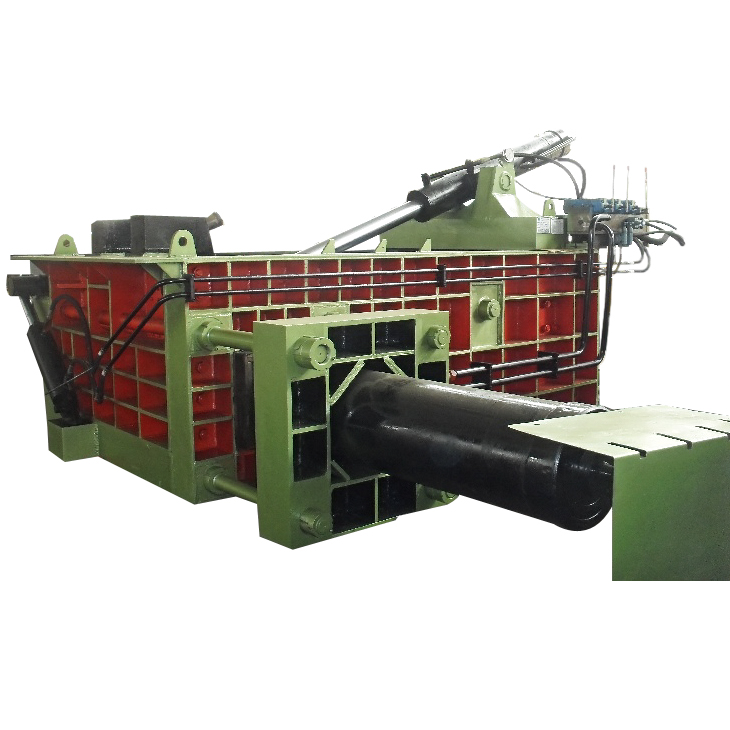
You need an engineering-focused evaluation of the physical materials. The structural integrity determines the overall machine lifespan.
Manufacturers often use standard mild steel for budget machines. Mild steel wears out quickly under heavy friction. You should demand high-tensile, abrasion-resistant plates. Hardox 450 or 500 represents the industry standard for main compression chambers. These AR plates resist gouging from sharp steel edges. Structural rigidity plays a massive role in modular designs. Detachable frames rely heavily on bolt-together tension. These bolted joints handle thousands of PSI during compression. Weak bolts or thin flanges will sheer under pressure. You must mandate high-grade structural fasteners for all modular connection points.
Steel Quality Comparison Chart
Material Grade | Yield Strength | Abrasion Resistance | Best Application |
|---|---|---|---|
Standard Mild Steel (Q235) | Low (~235 MPa) | Poor | Exterior panels, non-wear surfaces |
High-Tensile Steel (Q345) | Medium (~345 MPa) | Moderate | Main support frames, base plates |
Hardox 450 (AR Plate) | High (~1200 MPa) | Excellent | Compression chamber liners, shear blades |
Hardox 500 (AR Plate) | Extreme (~1300 MPa) | Superior | High-impact target zones, heavy ferrous scraping |
Hydraulic cylinder seals degrade rapidly in harsh environments. Heavy industrial use destroys cheap rubber seals quickly. Heat degradation and particulate contamination cause massive fluid leaks. You must review detachable metal baler specifications carefully. Look for recognizable, globally supported component brands. Bosch Rexroth, Parker, and Siemens offer worldwide part availability. Proprietary systems trap you into expensive manufacturer repairs. Hard-to-replace systems cause weeks of unnecessary downtime. Standardized PLC controls ensure local electricians can troubleshoot faults. Avoid obscure touch-screen interfaces lacking physical manual overrides.
Modular designs offer specific logistical advantages. You must understand the implementation realities before scheduling delivery.
Heavy machinery shipping costs destroy procurement budgets. Fitting equipment into standard 20ft or 40ft High Cube containers saves massive capital. Break-bulk shipping costs excessively due to special handling requirements. Flat-rack shipping exposes machinery to corrosive salt air during transit. An export shipping detachable metal baler solves these exact problems. Engineers design removable hoppers to maximize internal container space. The hydraulic power units ship as separate modular blocks. Conveyor attachments break down into stackable sections. This clever engineering reduces a bulky machine into tight, containerized footprints. You bypass oversized cargo fees entirely.
You must outline the rollout realities realistically. Assembly requires specific heavy lifting equipment. Your facility needs overhead cranes capable of lifting several tons. Forklifts often lack the necessary reach for chamber placement. Alignment tolerances for bolt-on components remain incredibly tight. Operators must align hydraulic pipes perfectly to prevent high-pressure leaks. Commissioning timeframes vary based on team experience. Self-assembly carries a genuine risk of structural misalignment. Detailed vendor schematics prevent these costly errors. You should demand step-by-step visual assembly guides. Video tutorials provided by the manufacturer speed up the process significantly.
Standard machines rarely fit perfectly into existing floor plans. You can modify parameters without sacrificing core structural integrity.
Facility constraints dictate machine selection heavily. You can modify the machine footprint to fit narrow corridors. Adjusting loading hopper angles allows easier forklift access. Reversing ejection directions helps bales slide directly toward staging areas. These modifications fit existing facility workflows seamlessly. Power supply customization represents another critical engineering step. Regional voltage standards vary dramatically. European facilities operate on 380V/50Hz grids. North American plants rely on 480V/60Hz power. The manufacturer must customize the electrical panels and motors accordingly. Incorrect voltage ratings destroy hydraulic pump motors instantly.
Your scrap stream might require optional features. High-temperature environments need integrated hydraulic cooling systems. Overheated hydraulic fluid loses viscosity and damages pump internals. Automated feeding conveyors speed up operations significantly. They eliminate dangerous manual loading practices. Mixed-material streams require specialized shear blades. A custom detachable metal baler adapts easily to these unique demands. It bridges the gap between standard off-the-shelf units and highly specialized needs. You can request magnetic separators for sorting ferrous from non-ferrous materials. Advanced PLC programming allows custom compaction cycles for specific metals.
You need a skeptical, evidence-based framework for shortlisting manufacturers. Marketing claims mean nothing without engineering proof.
Define the criteria for a credible detachable metal baler supplier clearly. You should demand documented case studies from similar industries. Require transparent factory testing procedures. Factory Acceptance Testing (FAT) verifies performance before shipping. The factory must run your specific scrap type during the test. Review warranty terms closely for hidden exclusion clauses. International buyers need fast after-sales support constantly. Modular replacement parts must ship quickly across borders. Ask the supplier about their local distribution networks. If they lack regional spare parts, your downtime will skyrocket.
Regional compliance standards remain strictly non-negotiable. European facilities require official CE marking. North American operations mandate UL/CSA electrical certification. ISO 9001 certification proves consistent manufacturing quality. You must verify these documents through independent registration bodies. Modular machines present unique safety challenges. Disconnected modules might bypass internal safety relays. Safety mechanisms must remain entirely uncompromised. E-stops must shut down all detached modules instantly. Interlock switches on removable hoppers must prevent operation when open. Verify these safety circuits during the initial design phase.
Buyers must prioritize abrasion-resistant construction and verifiable hydraulic components above all else. The logistical savings of standard container shipping make modular designs highly attractive. You must align the machine specifications exactly with your scrap material profile. Ignoring material memory or required shear force leads to premature equipment failure. Partnering with a transparent supplier ensures you receive reliable after-sales support.
Request detailed CAD drawings to verify facility spatial constraints.
Demand a comprehensive component brand list to ensure global spare part availability.
Require a clear breakdown of on-site assembly steps and crane requirements.
Confirm all regional electrical and safety certifications before signing the contract.
Issue the purchase order only after a successful Factory Acceptance Test (FAT).
A: Wear liners typically last between two and five years depending on your daily shift volume. Hardox 450 liners endure heavy abrasion significantly better than mild steel. Detachable designs allow for easier, segmented liner replacement. You can replace only the highest-wear zones rather than the entire chamber floor.
A: Yes, provided the hydraulic pressure settings are adjustable. The shear blades must be rated for the tensile strength of the hardest material processed. You should lower the crushing pressure for aluminum to prevent over-compaction, while increasing it for heavy steel scrap.
A: Assembly typically takes two to five days. You need an experienced mechanical team and appropriate overhead cranes. The exact timeframe depends on the machine size and modular complexity. Detailed vendor schematics and pre-labeled hydraulic hoses speed up the commissioning process dramatically.
A: Routine torque checks on structural assembly bolts are mandatory. Industrial vibrations slowly loosen modular connections over time. You must conduct rigorous inspections of hydraulic quick-disconnect fittings. Catching pressure leaks early prevents severe fluid loss and maintains optimal crushing force.


