


Views: 0 Author: Site Editor Publish Time: 2026-07-31 Origin: Site


Stainless steel presents a harsh operational reality in scrap processing facilities today. Its extreme tensile strength and aggressive spring-back effect mean standard mild-steel machinery often fails quickly. If you process these alloys using inadequate equipment, you risk accelerated wear. Operators also face sudden hydraulic failure or highly unstable bales. You must view this equipment purchase as a critical margin-protection strategy. Under-specifying your machinery inevitably leads to disastrous facility downtime. Conversely, over-specifying heavily degrades your immediate return on investment. To evaluate a stainless steel scrap baler correctly, buyers must look past baseline marketing claims. We recommend you scrutinize specific engineering thresholds instead. Specifically, you need to verify the hydraulic tonnage, chamber metallurgy, and heavy-duty shear force capabilities. These core metrics determine whether the machine will actually perform reliably long-term.
Material Rigidity Dictates Tonnage: Minimum hydraulic pressure thresholds are non-negotiable due to stainless steel's high yield strength.
Wear-Resistance is Critical: Chamber liners must utilize high-Brinell steel (e.g., Hardox/AR500) to withstand severe abrasion.
Bale Density Impacts Logistics: The right specs maximize payload weight for transport, directly influencing recycling ROI.
Supplier Support Rivals Machine Quality: Lead times for proprietary replacement parts can paralyze operations without a vetted supplier SLA.
Stainless steel behaves uniquely under extreme physical pressure. It possesses unusually high tensile strength compared to other common scrap metals. It also features distinct work-hardening properties. When you compress standard carbon steel or aluminum, they typically deform permanently. They stay crushed easily. Stainless steel fights back against the hydraulic ram. It has extreme material memory and severe rebound forces. As the machine presses the material, the alloy hardens even further. This physical reality demands exceptional structural integrity from your processing equipment. You cannot ignore these basic metallurgical facts.
Using standard equipment for these rigid alloys invites severe mechanical failures. We frequently see sheared structural pins when machines encounter high-yield materials. Blown hydraulic seals often occur because standard cylinders cannot handle the sustained pressure spikes. Over time, the extreme spring-back can permanently distort the main baler chamber walls. Furthermore, inadequate compaction leads to snapping wire-ties once the bale exits the machine. Snapping ties create serious safety hazards for floor workers. These predictable failures drastically reduce your facility productivity.
A successful implementation requires hitting several strict operational benchmarks. You must measure equipment success objectively. We define success using these three primary criteria:
You achieve consistent bale density across every single cycle.
The equipment sustains continuous daily operation without overheating internal hydraulic fluids.
The system provides safe automation where operators avoid dangerous manual jam-clearing interventions.
Meeting these benchmarks ensures profitable daily operations.
Standard equipment parameters rarely apply to heavy alloy processing. We will break down the essential technical metrics you must review before signing a purchase order.
Baling these tough alloys requires immense physical force. You must overcome the material’s natural spring-back effect completely. Standard non-ferrous balers often operate around 100 to 150 tons of compaction force. For tough alloy applications, operators usually need a minimum of 200 to 300 tons on the main compression ram. Reviewing the stainless steel scrap baler specifications ensures you match cylinder sizing to your required operating PSI. Larger bore cylinders generate more force at lower internal pressures. This specific design reduces long-term stress on internal seals and pump blocks. Always check the main cylinder diameter. A larger cylinder provides reliable compaction power day after day.
The main chamber endures intense friction during every compaction cycle. Replaceable, abrasion-resistant liners are absolute necessities. Floor and side walls must feature high-Brinell steel plates. Look for AR400, AR500, or authentic Hardox steel specifically. Standard mild steel wears down rapidly against abrasive scrap edges. Top-tier machines also employ ribbed or grooved liner designs inside the chamber. These special profiles prevent flat materials from sliding underneath the advancing ram. They effectively stop frustrating material jams before they start. You save hours of maintenance time weekly.
Long metal strips or oversized skeletons often require preliminary cutting. Heavy-duty, heat-treated shear blades are crucial here. The baler uses these blades to trim overhanging scrap as the ram moves forward. The blade angle matters significantly for clean cutting efficiency. A poor angle causes material folding rather than clean shearing. Additionally, you must verify the blades feature easily replaceable cutting edges. Reversible or bolt-on blades minimize your maintenance downtime drastically. Mechanics can swap them out quickly.
Recycling operations constantly balance throughput speed against overall electrical draw. We must analyze the critical trade-off between motor size and cycle speed. A massive motor drives hydraulic pumps much faster. However, it spikes your facility's peak electrical demand. You must evaluate cycle times in the context of tons-per-hour (TPH) throughput. Faster cycle times increase your daily material yield. They do require robust cooling systems, however. Good heat exchangers prevent hydraulic fluid degradation during rapid cycling.
Below is a quick reference guide highlighting key specification differences.
Specification Metric | Standard Mild-Steel Baler | Heavy-Duty Stainless Baler |
|---|---|---|
Main Ram Tonnage | 100 - 150 Tons | 250 - 400+ Tons |
Chamber Liners | Standard Carbon Steel | AR500 / Hardox (Replaceable) |
Shear Blades | Basic structural steel edges | Heat-treated, reversible tool steel |
Cooling System | Basic air cooling | High-capacity water or industrial air chillers |
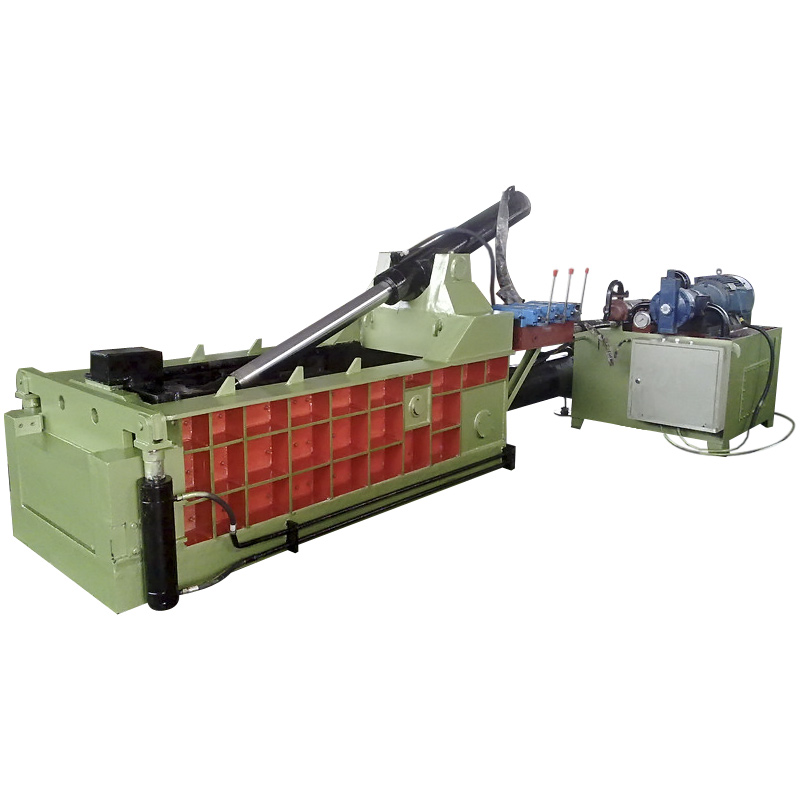
Plant logistics dictate how efficiently you process incoming material. Choosing the wrong machine shape creates massive operational bottlenecks.
Equipment form factors heavily influence your operational floor footprint. Vertical balers work well for low-volume processing. They fit into extremely tight spaces effortlessly. However, horizontal models dominate serious industrial scrap yards. Closed-end or auto-tie horizontal machines accommodate continuous, high-volume feeding. They handle large material batches smoothly via heavy loaders or long inclined conveyors. You rarely need manual loading for horizontal systems.
Bale dimensions and density specs heavily influence your transport efficiency. A reliable recycling plants stainless steel scrap baler ensures you maximize payload efficiency continuously. You want dense, uniform bales to align perfectly with standard shipping containers. They must also match flatbed weight maximums closely. Lighter bales leave empty truck space. This empty space severely hurts your shipping margins. Facility workflows also matter greatly. The unit must fit your conveyor feeding systems seamlessly. It must provide adequate forklift access for safe bale removal. Always measure your staging areas carefully before purchasing.
Off-the-shelf machines do not fit every industrial scenario perfectly. Sometimes, you need tailored engineering to overcome specific facility challenges.
You might process oversized industrial scrap regularly. Thick piping, long stamping skeletons, or bulky automotive parts present distinct feeding challenges. Modifying hopper sizes and feed openings is critical here. A custom stainless steel scrap baler solves these unique feedstock dimensions effectively. Custom hoppers prevent material bridging at the intake. They keep scrap flowing downward into the compression chamber without manual plunging.
Modern facilities demand interconnected production workflows. Custom equipment often features specific PLC (Programmable Logic Controller) software adjustments. These smart controllers handshake directly with your existing yard conveyors. They coordinate seamlessly alongside heavy shredders or magnetic separation lines. This integration creates a smooth, automated processing loop. Operators monitor the entire system from a single screen.
Harsh environments necessitate specialized machine protection. Custom electrical enclosures defend internal components against metal dust and moisture. You might specify exact NEMA ratings for exterior control boxes. Advanced safety interlocks protect operators during jam clearing procedures. Tailored engineering also guarantees strict compliance regarding local regulatory safety standards. You avoid costly compliance fines completely.
The machine's physical lifecycle depends heavily on your vendor's actual support infrastructure. Even the best equipment requires ongoing maintenance and occasional parts replacement over time. You are essentially buying a long-term partnership.
You need a reliable evaluation framework when choosing a vendor. We suggest using a rigorous vetting process. Your operations depend entirely on reliable equipment uptime. A dependable stainless steel scrap baler supplier provides transparent support metrics upfront.
Here is a vital evaluation checklist to use during your procurement phase:
Parts Availability: Ask if they use standard, off-the-shelf hydraulics. Proprietary parts guarantee long shipping delays during unexpected breakdowns. Open-source components allow local sourcing.
SLA and Tech Support: Check for guaranteed service response times. Ensure they have available regional field technicians near your facility. Phone support rarely fixes major hydraulic failures.
Warranty Realities: Read the fine print carefully before signing. Clarify exactly what the warranty covers. Understand what they consider normal wear and tear exclusions.
Buying a baler for these abrasive alloys requires precise engineering matching. It remains an exercise in balancing immense hydraulic power against structural integrity. You cannot compromise on steel rigidity or cylinder tonnage when handling aggressive spring-back materials.
We encourage buyers to conduct a strict material audit first. Measure the exact volume and grade of your stainless scrap. Map out your daily throughput goals clearly. Then, request detailed spec sheets and payload calculations from your shortlisted vendors. Make your final purchase decisions based purely on structural evidence and long-term support metrics.
A: The minimum force depends heavily on material thickness and grade. For light gauge trimmings, a 150-ton to 200-ton hydraulic press may suffice. However, processing thicker industrial skeletons or heavy automotive scrap typically requires 250 to 400 tons of compaction force. This higher range effectively neutralizes the material's severe spring-back memory.
A: Yes, they easily process softer non-ferrous metals. Because stainless alloys demand exceptionally rugged machines, these units handle aluminum and copper without structural strain. Operators simply adjust the hydraulic pressure settings downward. Lowering the compaction force prevents over-densification of softer metals, which secondary smelters often prefer.
A: Replacement timelines vary based on operating hours and material abrasiveness. In high-volume operations running multi-shift schedules, standard AR500 wear liners typically last 12 to 18 months. Regular inspections dictate the exact timeline. You should replace floor and wall liners before deep grooves compromise the underlying structural steel.
A: Absolutely. Bale density directly dictates your shipping logistics. If bales lack density, you reach your truck's physical volume limit before hitting the maximum legal weight payload. Maximizing payload weight per container significantly reduces your cost-per-ton for freight, directly boosting your overall profit margins.


